
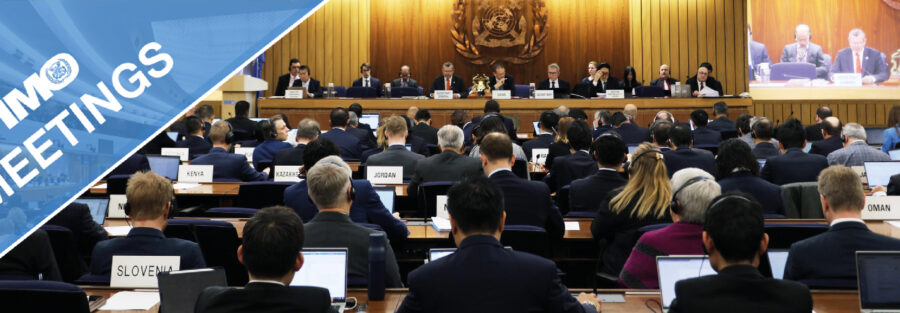
What is the IMO? If you’ve ever asked yourself, you’re in the right place. There’s a good chance your coffee, your laptop, and even the clothes you’re wearing traveled across an ocean. Over 90% of global trade happens by sea, yet the organization that keeps this colossal system safe, secure, and clean often operates just below the public’s waterline. As someone who has spent years in the maritime industry, I want to pull back the curtain on this “invisible guardian”: the International Maritime Organization (IMO).
This isn’t just a list of acronyms; it’s the very nervous system of global shipping. Understanding its structure helps us appreciate how a decision made in a London conference room can change the way a ship operates in the middle of the Pacific.
What is the IMO?
At its core, the International Maritime Organization (IMO) is a specialized agency of the United Nations responsible for setting the global standards for shipping. Its mission is simple but immense: to ensure shipping is safe, secure, and environmentally sustainable.
To prevent any single nation or group from having too much influence, the IMO has a balanced structure:
- The Assembly: This is the highest governing body, where all 175 Member States meet every two years to set the overall policy and budget.
- The Council: This is the executive organ, composed of 40 Member States elected by the Assembly. They are chosen from three different categories to ensure a fair representation of major shipping nations, large trading countries, and other maritime interests.
Understanding its legal framework is crucial to fully grasp what is the IMO and its authority. However, the real, detailed work happens in the specialized committees. This is where regulations are born, debated, and refined.
Meet the Committees
Think of the IMO as a highly advanced vessel. The Assembly and Council may set the course, but the committees are the specialized departments in the engine room and on the bridge, ensuring every system functions perfectly. Here are the key players:
- MSC – The Maritime Safety Committee This is the operational brain of the IMO when it comes to safety. The MSC deals with all matters related to the safety of life at sea and navigation. Its most famous creation is the SOLAS Convention (International Convention for the Safety of Life at Sea), the cornerstone of maritime safety regulations. From fire protection systems to navigation rules and the safe transport of cargo, the MSC’s work is what prevents accidents and saves lives.
- MEPC – The Marine Environment Protection Committee This is the green conscience of the maritime world. The MEPC is dedicated to preventing and controlling pollution from ships. Its flagship achievement is the MARPOL Convention. If you’ve heard of the IMO 2020 Sulphur Cap – the groundbreaking rule that slashed sulphur oxide emissions from ship fuel by over 85% – that was the work of the MEPC. Today, it is spearheading the industry’s ambitious journey towards achieving net-zero greenhouse gas emissions by or around 2050.
- LEG – The Legal Committee Shipping is a global business, and when things go wrong, legal issues can be incredibly complex. The LEG Committee deals with all legal matters within the IMO’s scope. This includes issues of liability and compensation in case of accidents (like oil spills), the handling of wreck removal, and ensuring seafarers are not abandoned in foreign ports. It provides the legal framework that underpins the industry’s operations.
- FAL – The Facilitation Committee Time is money, especially in shipping. The FAL Committee’s main goal is to slice through administrative red tape. It works to simplify and harmonize the formalities and procedures associated with the arrival, stay, and departure of ships in ports. Its recent work on mandating a “Maritime Single Window” system aims to digitalize reporting, making international trade faster and more efficient.
- TC – The Technical Co-operation Committee Having world-class rules is only effective if every country can implement them. The TC Committee oversees IMO’s capacity-building programs, providing training and support to developing countries to help them meet global standards effectively. It ensures that safety and environmental protection are not just a privilege of wealthy nations.
The Role of Sub-Committees
Beneath the main committees are several highly specialized sub-committees. These are the technical experts who dive into the details. For example, the Sub-Committee on Carriage of Cargoes and Containers (CCC) does the vital groundwork on how to safely transport everything from grain to gigantic containers and hazardous materials. They are currently at the forefront of developing safety codes for new, cleaner fuels like ammonia and hydrogen. Their technical reports are then passed up to the MSC and MEPC for final approval.
The Role of Audits
But how do these complex regulations move from an IMO meeting room to the engine room of a ship? Once a new rule is approved and enters into force after a set period, it becomes mandatory for international shipping. This is where theory meets practice. We play a crucial role in this process by verifying that these standards are being met on the ground. Our expert teams conduct thorough maritime audits to ensure that vessels and their management adhere to the critical safety, environmental, and security standards set by the IMO.
Conclusion
What is the IMO? The International Maritime Organization can seem like an alphabet soup of committees and regulations. Yet, this complex structure is precisely what allows it to manage the competing interests of a global industry effectively. It is a forum where nations, big and small, come together to create a framework that makes the world’s most essential industry progressively safer, greener, and more efficient for us all. It’s a quiet but powerful force, shaping the very flow of our world.

1 Comment
A Comprehensive Guide to Water Ballast Management System in 2025 - DeepBridge Maritime Consulting
[…] The International Maritime Organization (IMO) has introduced fundamental changes to the way vessels document ballast water operations. These amendments, which entered into force on 1 February 2025, are not merely a bureaucratic update but a direct response to identified, industry-wide compliance issues that undermined the effectiveness of the International Convention for the Control and Management of Ships’ Ballast Water and Sediments (BWM Convention). […]