
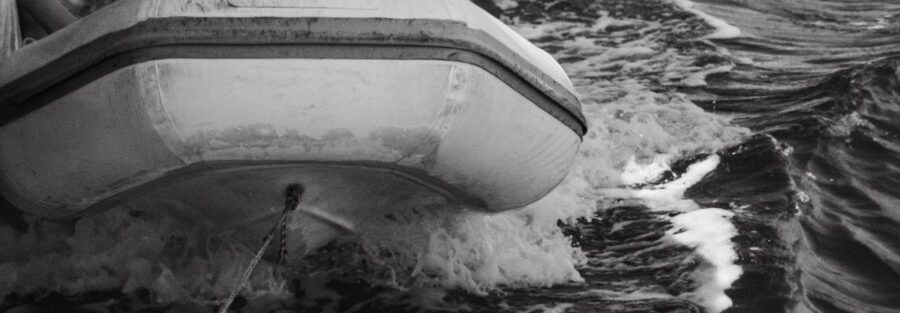
Serious injury to. The boat had enough bench seating for all 12 passengers.
Two were moved to the forward jockey seats anyway.
That was the usual seating method.
Fill from the front.
On 7 June 2023, Lundy Explorer encountered worsening conditions.
The boat slammed heavily into a wave.
A passenger in a forward jockey seat was dislodged. She fractured her spinal column and was permanently paralysed.
The obvious explanation sits at the helm.
The skipper did not expect the increased wave height. He underestimated how the rough conditions were affecting passengers and did not abort the trip.
But the skipper was not experiencing the same ride.
The highest shock loads were at the front. The skipper had no real-time monitoring equipment to show what the passenger was absorbing.
That made the decision dependent on judgement from another position in the boat.
Now look at the controls.
The company had some written emergency procedures and a few operational risk assessments.
The use of jockey seats was not risk assessed.
The safety briefing did not adequately explain how passengers should use those seats. The passengers were unaware of the risk.
There were no formal maximum operating parameters, such as sea state. The go/no-go decision was subjective.
Each control stopped short of the exposure.
The briefing did not equip passengers to manage it.
The risk assessment did not examine the seats creating it.
The operating procedure did not define when conditions required the trip to stop.
And the skipper had no instrument measuring what passengers were experiencing at the bow.
This matters beyond one RIB.
Since 2001, MAIB has been notified of 54 RIB ride accidents involving lower back injuries. Seventeen resulted in spinal fractures.
Its analysis found significantly higher risk for passengers seated in the forward third of a RIB. Vertical motion is generally greater towards the bow.
Yet current regulations do not set safety standards for the design, position and use of seats on high-speed RIBs.
So the operator has to close that gap operationally.
Not with a general instruction to proceed carefully.
With defined seating restrictions. Formal operating limits. A briefing matched to the actual seat. And a way to detect when the people furthest forward are taking loads the skipper cannot reliably judge from the helm.
After the accident, the operator limited use of the forward jockey seats to benign conditions.
For a DPA or passenger-boat operator, the practical test is simple.
Where does your risk assessment account for different exposure on the same vessel?
And what tells the person making the go/no-go decision that the limit has already been reached somewhere they cannot feel it?
#MaritimeSafety #MarineAccidentInvestigation #SafetyManagement #RiskAssessment #HumanFactors
