
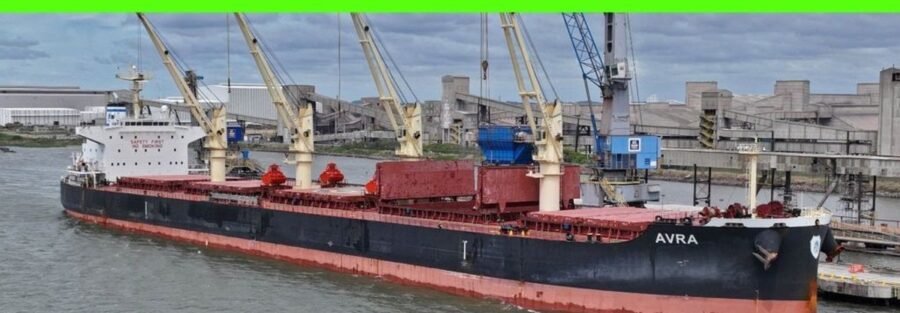
Marshall Islands Accident. How do you supervise an enclosed-space entry that nobody is required to report?
On 25 July 2025, AVRA was berthed at Daesan Port.
The bulk carrier was discharging wood pellets.
The Bosun was found collapsed inside the No. 4 cargo hold aft access hatch space.
The crew brought him to the main deck at 1033. First aid and CPR started immediately.
He was taken to a local hospital. At 1216, the ship was told he had died.
The first explanation looks complete.
He entered an enclosed space without following company procedures.
He had gone through the No. 4 aft access hatch space to reach the No. 5 forward inspection platform. The task was to sweep away cargo residue.
But the report identifies a deeper control gap.
The crew manual required no report when personnel entered enclosed spaces identified as low risk.
At the same time, the Chief Officer did not adequately oversee the Bosun’s movements and work. The report linked that reduced oversight to the Bosun’s perceived experience.
One classification reduced visibility.
One reputation reduced supervision.
The procedure still existed. But management had no compulsory report for this category of entry, while supervision had already relaxed around an experienced person.
That does not excuse the decision to enter.
It means procedure non-compliance is an incomplete management finding.
A procedure can control an entry only when the system makes that entry visible.
Who must report it?
Who receives that report?
Who can prevent access?
What tells the supervisor that someone has moved outside the agreed task?
The report also identified poor or absent warning signs and physical barriers as a possible contributing factor.
The Bosun was expected to comply.
The Chief Officer was expected to supervise.
But entry into a low-risk enclosed space did not have to be reported.
The system relied on an experienced person choosing the full procedure, and on someone else noticing if he did not.
Experience then became a reason to watch less.
For a DPA, “low risk” should change the control set. It should not remove operational visibility.
Take the enclosed-space register and test every category against actual access.
Can a person enter without reporting?
Can the access point be opened without a barrier?
Can the supervisor verify where the team is during cargo work?
And if the answer depends on experience, is that experience acting as competence — or as silent permission?
Which enclosed spaces in your fleet can be entered without a report, and who is expected to notice before the hatch closes?
#MaritimeSafety #MarineAccidentInvestigation #SafetyManagement #HumanFactors #OccupationalSafety
