
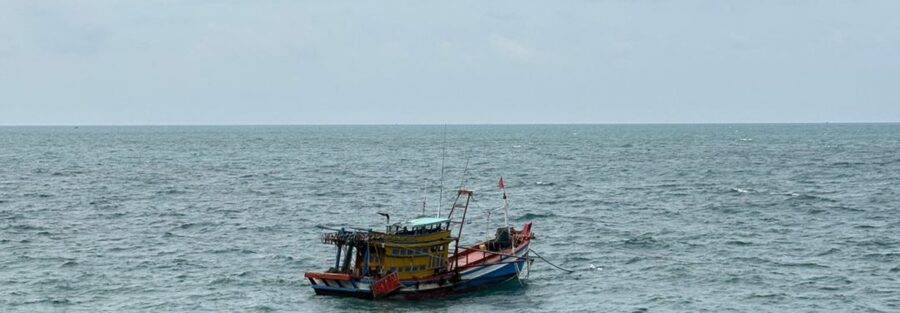
Sea Eagle. The vessel carried a kill cord, a MOB ladder and a registered PLB.
After the skipper went overboard, the engines kept running. The ladder remained stowed. No alarm was raised.
Sea Eagle was fishing alone off the Scottish coast on 20 December 2025.
At some point after 0900, the skipper entered the water. The mechanism remains unknown.
The vessel continued unmanned on autopilot.
At about 0905, it had been set on a north-westerly course at 7 knots.
There was little opportunity to catch it.
The immediate explanation is single-handed fishing. One person. Moving gear. Cold water. Nobody available to stop the vessel or start recovery.
But the report shows something more useful for management.
The risk assessments already recognised entanglement, being pulled into the water and falling overboard while clearing creels.
The hazard was known.
Yet the assessments did not address carrying and deploying multiple strings or downstacking stacked creels.
That mattered because the skipper was working with two strings. This increased the risk of fouling and the need to interact with the gear.
The documented control was to stay clear of moving rope or remain in the wheelhouse while shooting creels.
The actual method still required the skipper to engage with the gear when deploying the second end weight and dhan flag. There was no physical separation from the rope on deck.
The procedure described separation.
The task still required contact.
Then look at the recovery controls.
The kill cord was attached to the engine controls, not the skipper. The engines therefore continued running after he entered the water.
The MOB ladder was found stowed.
The PLB required manual activation. It was not found on board, but the investigation could not establish whether the skipper carried it. No alarm was raised.
Three inflatable PFDs remained on the vessel. The report concluded that the skipper may not have been wearing one.
Each control existed.
Each also depended on the same lone operator completing the right action before, during or after the emergency.
Once he could no longer act, there was no second person, independent trigger or feedback loop.
This is where equipment lists create false confidence.
Availability is not the same as protection. A kill cord protects only when connected. A manual beacon works only if carried and activated. A recovery ladder helps only while the casualty can still reach the vessel.
For owners and safety managers of single-handed vessels, the assurance test should start after the person enters the water.
Which controls still operate without their input?
Which ones stop the vessel, raise the alarm or create a realistic route back on board?
And which controls exist only while the casualty remains able to use them?
#MaritimeSafety #FishingVessels #ManOverboard #RiskAssessment #PPE
