
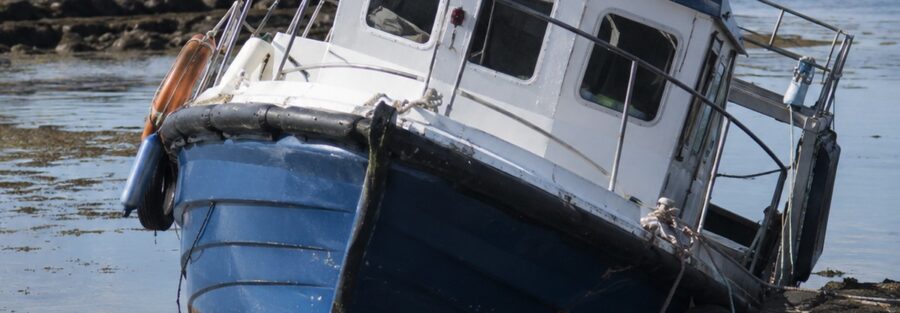
Jean Elaine. The vessel was not certified for the voyage.
The organisation using her had never formally checked.
At 1500, Jean Elaine grounded in Saint Peter's Pool.
She developed a severe list to port. Water entered the hull. The vessel was abandoned and became a constructive total loss.
Nobody was injured.
The immediate navigational failures were clear.
No paper charts.
No written passage plan.
No waypoints, tidal information or marked no-go areas.
The skipper used a tablet application that did not comply with the relevant MCA guidance. It was also his first passage into Saint Peter's Pool.
Those facts explain the grounding.
The larger control failure started before departure.
A survey on 29 April 2024 found sprung and rotten hull planking. Jean Elaine's certificate was not renewed.
The skipper had operated the vessel for more than 30 years. His certificate of competence had expired one week before the grounding.
Heriot-Watt University had never formally reviewed either certificate.
It relied on the skipper's verbal assurances and the vessel's previous commercial activity.
Familiarity became evidence.
Past operation became proof of present compliance.
The project then moved beyond its approved plan.
The risk of entering Saint Peter's Pool was not assessed. The university's diving rules required close communication between the skipper and diving supervisor, but no clear communication protocol existed.
The skipper entered the pool believing another dive would take place. He wanted to remain close to the inflatable boat and did not fully understand the team's intentions.
Two separate control gaps met during one manoeuvre.
The first allowed an uncertified vessel and an expired qualification to remain undetected.
The second allowed an operational change to happen without shared understanding or a fresh risk assessment.
Calling this poor passage planning is accurate.
It is also incomplete.
The shore-side assurance process accepted statements about certification without requiring anyone to verify them at the time of use. The operational process required close communication without defining how the change would be agreed, recorded or stopped.
A charter checklist can name every required certificate. A risk assessment can identify the vessel as suitable. Neither provides assurance until somebody checks the original documents, their validity, their scope and the operation they cover.
Then the same discipline must survive a change of plan.
Who confirms the change and reassesses the risk?
Who can stop the vessel from entering an area outside the agreed operation?
Thirty years of experience did not make the missing controls visible. It made the assumptions easier to accept.
When your company hires a small vessel, who must positively verify that the documents named in the risk assessment remain valid on the day of operation?
#MaritimeSafety #MarineAccidentInvestigation #RiskAssessment #HumanFactors #Grounding
