
Flooding and foundering. The renewal survey produced a hull condition report.
It said nothing about the seawater pipework.
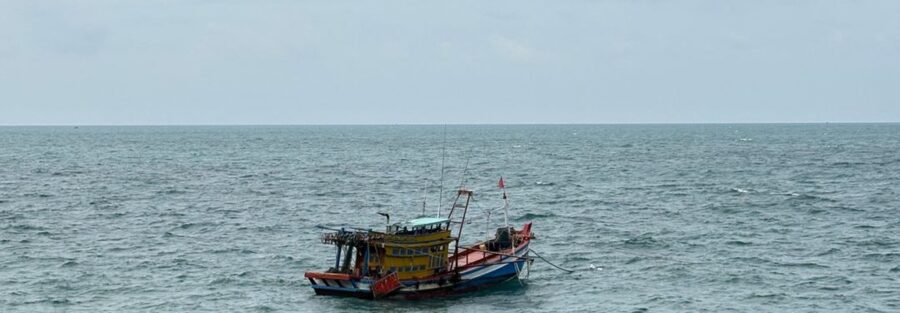
On 24 March 2024, the stern trawler Opportune foundered 36 miles east of Lerwick.
The engine room flooded uncontrollably.
The source could not be established with certainty. The most likely cause was failure of the seawater pipework. Some of it might have remained from the vessel's build 26 years earlier.
Ageing pipework can fail.
The management problem began before that failure.
The Report of Hull Condition did not comment on the seawater pipework.
The vessel's safety folder contained no maintenance or inspection plan for the pipework or bilge pumping arrangements.
It also contained no risk assessment for seawater pipework failure.
The stronger survey logic already existed.
MCA guidance in SAN 29 called for a more invasive regime on fishing vessels over ten years old. Unless recent renewal could be demonstrated, that included internal examination, pressure testing or thickness measurement at renewal survey.
Yet in September 2025, SAN 29 still remained an internal MCA reference document. It had not been incorporated into MSIS 27.
A risk can be understood technically and still remain weakly connected to the formal control process.
Then the operational barriers are tested.
Both electric bilge pumps had to be started inside the engine room. There was no remote operation.
The sea inlet valves were below the floor plates. Their positions were not marked above. No plan near the entrances showed the valves or bilge pump controls.
When the skipper and mate opened the engine-room door, the space was filled with white, odourless vapour. They judged it unsafe to enter.
The report compared a potential ingress of about 480 tonnes per hour with a combined electric pumping capacity of 50 cubic metres per hour.
The numbers had already decided the outcome.
The crew survived because the skipper raised the alarm and abandoned the vessel in time. Their familiarity with drills and lifesaving appliances helped them leave safely.
Emergency preparedness protected life.
Preventive assurance had not established the condition of the system that threatened the vessel.
For a DPA, Fleet Manager or survey manager, a certificate with no adverse comment is not enough.
Ask what was physically exposed.
Ask what was measured.
Ask which inaccessible sections remained in place.
Then record the evidence, not the assumption.
When your survey report is silent, what process decides whether that silence means satisfactory condition or an unexamined risk?
#MaritimeSafety #Flooding #Maintenance #Auditing #FishingVessels
