
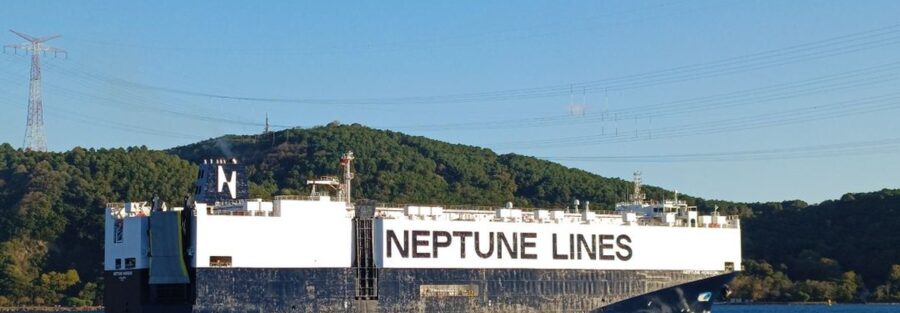
Laureline. The cargo audits found unsafe manoeuvres.
The company still had no way to verify whether its own procedure worked.
On 13 July 2024, at about 1711, able seaman Alain Canete was working on Laureline's vehicle deck.
A tug driver paused for approximately five seconds while positioning a trailer.
The AB moved behind it.
The driver then resumed the manoeuvre.
The AB was crushed between the trailer and the vessel's structure.
It is easy to stop there.
A person entered the danger zone. A driver moved without seeing him.
But both men believed something different was happening.
The AB likely assumed the manoeuvre had finished.
The driver did not know where the AB was.
There was no positive feedback between them.
A stopped trailer looked safe to approach. Five seconds later, it moved again.
That operational gap should have been controlled by the new vehicle deck procedure.
The procedure defined a danger zone. It required crew to remain outside it. It also expected crew members to monitor each other.
Yet CCTV showed repeated danger-zone entries.
Tug drivers routinely continued manoeuvring when crew were outside their line of sight.
On the garage deck, the two ABs worked on opposite sides. They could not see each other.
The control assumed visibility and mutual monitoring that the job did not consistently provide.
Training had also been completed.
Both ABs scored highly in the assessment.
But the multiple-choice test contained no question about the danger zone. It did not test the explicit instruction against passing behind a connected trailer.
A high score therefore confirmed completion of the assessment.
It did not confirm understanding of the control that mattered during the task.
There was another warning.
Across 35 terminal audits, 243 tug units were checked. Sixteen were manoeuvred by people who did not understand the danger zone, could not see each other while reversing, or both.
The unsafe pattern was observable.
Still, the vessel management company had introduced no assurance measures to monitor how its procedure was being used on board.
This is where procedure management becomes operational assurance.
Issuing a revision is administration.
Delivering training is implementation.
Checking whether the control survives the workplace is assurance.
For a DPA, that check cannot end with attendance records and assessment scores.
Watch the operation.
Can the crew remain where the procedure places them?
Can they maintain the required visibility?
What tells them that movement has positively ended?
What happens when one person disappears from view?
And who verifies the answers after the procedure enters service?
If your next procedure rollout produces perfect records, what evidence will show that the control also works on deck?
#MaritimeSafety #Auditing #SafetyManagement #CrewTraining #ShipOperations
