
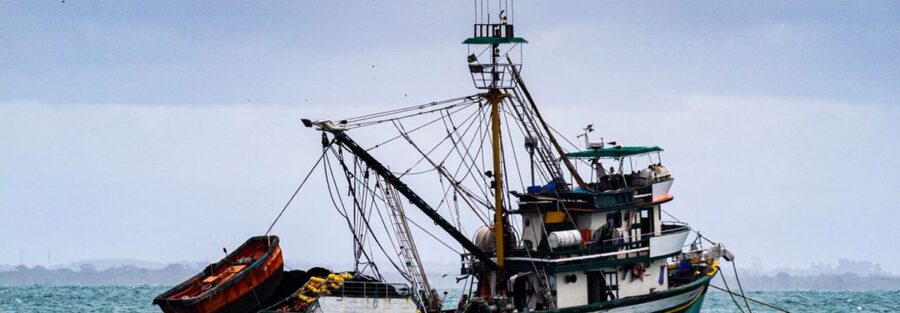
Fatal accident on. What does a lifting-gear inspection prove when the critical section cannot be examined in place?
On 30 January 2021, Cornishman's engineer inspected the equipment at the derrick heads.
No defect in the quick-release chain was identified.
At about 0630 on 6 February, a chain link fractured.
The port trawl beam fell to the deck.
Two deckhands were working beneath it, repairing the steel chain mat. One died. The other sustained minor injuries.
The immediate control sounds obvious.
Keep people away from suspended equipment.
The applicable onboard risk assessments were not followed. The report also judged their stated mitigations to be probably unrealistic.
The beam had no independent protection from above. Its weight was supported solely by the derrick and quick-release gear.
If one component failed, the load would fall into the workspace.
But the report goes further than unsafe positioning.
The chain fractured where it passed over a fixed pin. That arrangement bent and side-loaded individual links. It also caused heavy wear to the pin.
The critical area was difficult to inspect.
A thorough assessment of the chain section around the fixed pin was impracticable while the chain remained fitted.
After the accident, both quick-release chains were found corroded and worn. They contained numerous cracks that were invisible until cleaning.
So the inspection existed.
The method could not reliably expose the degradation it was supposed to find.
There was no formal planned maintenance schedule for the fishing gear. The person designated as competent did not have the knowledge required for an effective inspection of this arrangement.
The vessel's safety folder added another layer. It contained generic policies but lacked specific procedures for managing LOLER, despite that being required by the company's safety management manual.
None of this began in 2021.
In 2015, a cracked link was found in a similar quick-release chain on another trawler in the same fleet. The failed link was not analysed.
That warning produced no change to maintenance, inspections or risk assessment.
The missed defect came at the end of the chain.
The missed opportunity to learn came years earlier.
For a DPA, an inspection record is only the starting point.
Can the competent person physically reach the critical area?
Must the equipment be lowered, dismantled or cleaned?
Does a defect on one vessel trigger an engineering review across the fleet?
And who verifies that the review changed the control?
If your inspection can be completed without exposing the component most likely to fail, what exactly has management assured?
#MaritimeSafety #MarineAccidentInvestigation #LiftingOperations #Maintenance #FishingVessels
