
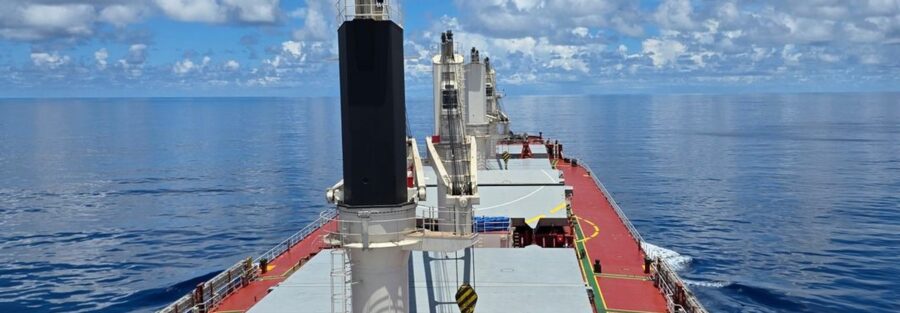
Berge Mawson. The ship had enclosed-space procedures.
The stevedores exposed to the hazard had no enclosed-space awareness training.
Berge Mawson. Bunyu Island anchorage. 27 June 2022.
One stevedore entered the access space to cargo hold No.8 without supervision. He had taken the wrong entrance.
He collapsed.
Two other stevedores went in to rescue him.
They collapsed as well.
All three died.
The space had been closed and unventilated for nearly 48 hours. It remained in contact with the coal cargo.
A later measurement in the forward access recorded 0.9% oxygen.
The immediate danger was an atmosphere that could not support life.
The management problem started before anyone opened the hatch.
The vessel had procedures for cargo hold access. Atmosphere testing was required before entry.
Those procedures were not routinely followed.
The permit to work system was not used for cargo hold access during loading. The hatch covers were dogged down, but not padlocked.
Some identification labels were obscured by paint, broken or unclear.
Warnings were written in English. At least one of the bulldozer operators could neither read nor speak English.
None of the casualties had completed enclosed-space awareness training.
Each control depended on recognition.
Recognise the hatch.
Understand the warning.
Know that a permit is required.
Ask the Chief Officer before entering.
That chain may make sense to a crew member familiar with the ship. It is a weak barrier for shore personnel moving between unfamiliar holds, ladders and access spaces.
The report found ineffective supervision of the stevedores. Their safety was not being managed.
Then the first man collapsed.
The crew began collecting rescue equipment. During that interval, the entrance was left unguarded.
Two more people entered.
The vessel practised enclosed-space rescue. But its drill scenarios did not consider stevedores working on board during a rescue from a cargo hold.
So the emergency arrangement prepared the ship to recover a casualty.
It did not control the actions of untrained third parties who could reach the same opening first.
For a DPA, this is a ship-shore interface test.
A signed checklist does not allocate supervision by itself. A warning does not work if the exposed person cannot understand it. A rescue plan remains incomplete if nobody immediately controls the entrance.
Walk the operation from the stevedore's side.
Who explains the restricted spaces in a language they understand?
Who monitors their movement throughout the watch?
Who physically prevents access when a hatch must be opened?
Who guards the entrance from the first alarm, before the rescue team is ready?
When shore personnel work on board, where does your SMS transfer supervision from an assumption to a named person with authority to intervene?
#MaritimeSafety #MarineAccidentInvestigation #SafetyManagement #OccupationalSafety #EmergencyPreparedness
