
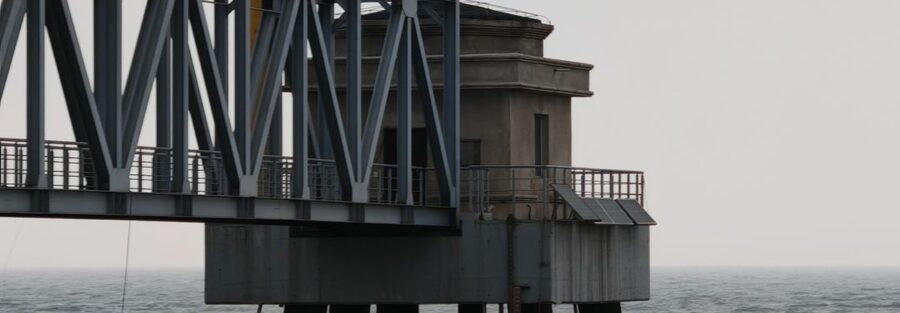
Contact with pier. The dead centre event was known.
The chief engineer did not know how to recognise or prevent it.
On 3 Sept 2020, the paddle steamer Waverley approached Brodick’s eastern pier.
The engine was stopped before the astern movement.
The high-pressure piston stopped at dead centre.
Astern propulsion did not arrive.
Waverley struck the closed end of the pier at approximately 2.8 kts.
Twenty-one passengers and three crew members were injured.
A rare machinery event appears to explain the accident.
But rare did not mean unknown.
Dead centre events had happened before. The engineering team did not routinely practise recovery because the condition was difficult to reproduce.
Post-accident trials tried many times.
They could not reproduce it either.
That made experience important.
It also made dependence on experience dangerous.
The chief engineer was unfamiliar with the indicators warning that the piston had stopped at dead centre. He did not know how to anticipate or prevent it.
Then the engine was slow to restart.
Loose locking nuts had altered the high-pressure piston valve travel by 5.4%. The changed timing allowed excessive steam into the cylinder and created a steam lock.
This was not one isolated failure.
It was a chain of knowledge, maintenance and operational assumptions.
There was no formal, documented training system. Engineers learned mainly by doing the job at sea or during maintenance periods.
Their operating capability was not formally documented or standardised.
Experienced engineering personnel had left. That reduced the training available to those replacing them.
Maintenance carried the same weakness.
The schedule was detailed. Previous work and supporting records were not formally captured.
There was no formal, documented planned maintenance system.
So the organisation depended on crew remembering what the machinery had done, what had been adjusted and what warning signs mattered.
That knowledge could leave with the engineer.
The approach itself added another assumption.
Waverley had already berthed successfully on the eastern side of the pier 29 times.
Yet the risk of a dead centre event during arrival at a closed-end berth had not been assessed or effectively mitigated.
Previous success had become operational reassurance.
It was not evidence that the failure had been controlled.
For a DPA, this is where machinery assurance must leave the office.
Identify the failure mode.
Document its indicators.
Train recovery under realistic limitations.
Record who can demonstrate the competence.
Then test whether the risk assessment changes the manoeuvre when propulsion recovery is uncertain.
A maintenance schedule cannot retain corporate knowledge by itself. Neither can a certificate establish whether the current engineer recognises a rare failure quickly enough.
If your most experienced engineer left tomorrow, which safety-critical machinery risk would leave with them?
#MaritimeSafety #MachineryFailure #Maintenance #CrewTraining #RiskAssessment
