
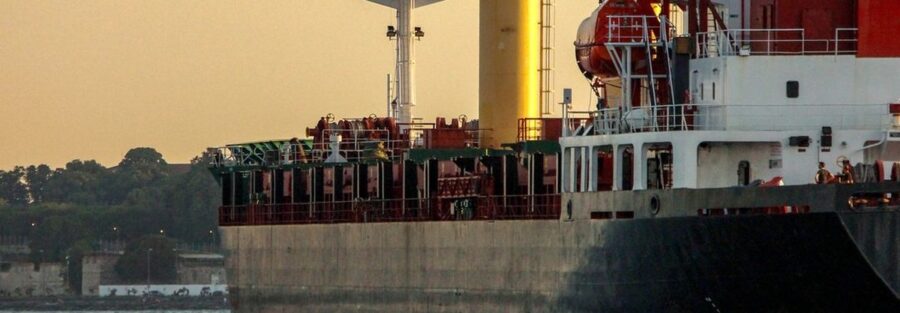
Polesie and the general cargo ship Verity. A shore instruction was meant to prevent a collision.
The reconstruction found that following it helped create one.
At 0455 on 24 Oct 2023, Polesie and Verity collided in the German Bight TSS.
Verity sank quickly.
Five of her seven crew lost their lives.
The collision risk was not hidden.
At 0410, the vessels were 6.4nm apart. The CPA was 0.15nm, 45 min. to CPA.
There was room to manoeuvre. Traffic and navigational hazards were not significant constraints.
Yet the close passing distance remained accepted.
Polesie's OOW did not use ARPA to obtain accurate CPA and TCPA data for Verity.
Both vessels altered course in small increments using autopilot.
Those alterations were difficult for observers to recognise as collision avoidance action.
The bridge teams had information.
They did not turn it into early, positive action.
Then the shore became involved.
The first confirmed VTS intervention came at 0450. The vessels were 1.3nm apart, with 7m20s to CPA.
Verity initially stated an intention to maintain course and speed. After the VTS call, she started turning to starboard.
Polesie was turning to port.
The vessels could not hear each other directly on the VHF channel. VTS had to relay the meaning of one vessel's transmission to the other.
Shared awareness arrived through an intermediary. Under severe time pressure.
Then VTS instructed Polesie not to turn to port, but to turn to starboard.
Polesie changed to manual steering and applied hard-starboard rudder. Verity was about 0.4nm ahead and already turning to starboard.
The vessels collided at 0455.
MAIB's reconstruction found that Polesie would not have collided with Verity had she continued the port turn.
This does not remove responsibility from either bridge team. The report identified significant shortcomings in both officers' application of the COLREGs.
But the management issue goes further.
VTS had trained and experienced personnel. It had automatic CPA warnings. It had authority to provide assistance and instructions.
It had no formal guidance for what to do after identifying a CPA of concern.
The final intervention arrived when the developing manoeuvres could no longer be safely understood from ashore. The report called that intervention counterproductive.
A safety layer can create another hazard when its intervention threshold is unclear.
The practical test for a DPA is not whether the passage plan mentions VTS.
Test the conflict.
What should an OOW do when a late shore instruction contradicts the avoiding action already underway?
How is the vessel's intended manoeuvre confirmed?
Can both ships hear the same exchange?
And at what point must shore assistance stop short of prescribing the helm order?
Does your bridge procedure answer those questions before the TCPA reaches single figures?
#MaritimeSafety #MarineAccidentInvestigation #Collision #COLREGs #Watchkeeping
