
How a European Tanker Operator Eliminated PSC Detention Risk and Secured Fleet Integrity with DeepBridge Maritime Consulting
A reputable Italian-based operator of a European chemical tanker fleet faced the imminent commercial threat of a third Port State Control (PSC) detention and a potential regional ban in the Paris MoU region. This followed a second detention of their Cyprus-flagged vessel, which had accumulated over ten deficiencies. DeepBridge Maritime Consulting conducted a targeted on-board audit and implemented a robust corrective action plan, resulting in a subsequent zero-deficiency PSC inspection, mitigating the ban risk and ensuring the vessel’s continued commercial viability.
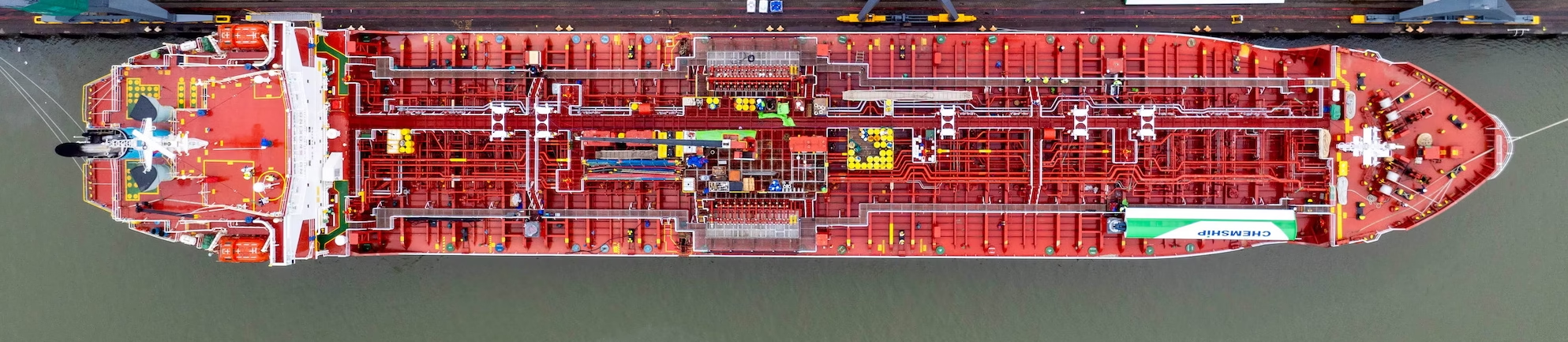
Navigating the Peril of a Third Detention
The maritime industry operates under a microscope of regulatory oversight, and in recent years, that scrutiny has intensified. The Paris Memorandum of Understanding (MoU) on Port State Control, a critical benchmark for vessel compliance in European waters, has signaled a clear trend towards stricter enforcement. The Paris MoU’s 2024 Annual Report highlighted a regrettable increase in the regional detention rate to 4.03%, a figure that remains significantly higher than pre-pandemic levels. For vessel operators, this data point is not merely a statistic; it is a warning that the margin for error has narrowed and that any lapse in compliance is more likely than ever to result in costly and reputation-damaging detentions.
The Client’s Crisis: A Compliance Paradox
It was within this challenging environment that a respected Italian tanker operator faced a precarious situation. One of their chemical tankers, trading in Northern Europe, was detained by PSC authorities for a second time within 24 months. The detention was not just a procedural setback; it was a critical indicator of a deeper issue. The vessel was registered under the Cyprus flag, an administration that holds a strong position on the Paris MoU White List, ranking 19th among 40 high-performing flags.
A detention under a reputable, White-Listed flag cannot be easily attributed to administrative oversight by the flag state. Such an event points directly to systemic failures within the operator’s own management system and the on-board implementation of its Safety Management System (SMS). This created a “compliance paradox” for the client: while they believed their systems were robust, the objective evidence of a second detention suggested a critical disconnect between shoreside policy and shipboard practice. The incident placed immense pressure on the company’s Designated Person Ashore (DPA) and senior leadership, casting serious doubt on the operational integrity of their entire fleet.
A Pattern of Neglect
The second detention was triggered by over ten deficiencies, a clear sign of a widespread pattern of non-compliance rather than an isolated oversight. The deficiencies spanned critical areas of vessel safety and crew welfare, painting a concerning picture of the vessel’s condition. Based on the most common deficiencies recorded across the Paris MoU region, the key findings included :
- International Safety Management (ISM) Code: A major non-conformity was issued, indicating a fundamental and systemic failure in the vessel’s SMS—a clear signal to authorities that safety procedures were not being effectively implemented.
- SOLAS Chapter II-2 (Fire Safety): Multiple deficiencies were noted, including defective fire dampers and fire doors in main fire-resisting divisions being blocked or improperly maintained. This category alone accounts for 17.2% of all deficiencies in the region, making it a major focus for PSC officers.
- MLC 2006 (Crew Welfare): Significant discrepancies were found in Seafarers’ Employment Agreements (SEA) and incomplete records of rest hours, suggesting potential crew fatigue and contractual non-compliance.
- SOLAS Chapter V (Safety of Navigation): The vessel’s voyage plan for its intended route was found to be incomplete and lacked critical details, a top-five individual deficiency noted by PSC authorities
The Threat of a Regional Ban
The technical failings were severe, but the commercial implications were catastrophic. Under the Paris MoU framework, a vessel that is detained three times within a 36-month period risks being issued a “Refusal of Access” order, effectively banning it from all ports and anchorages within the region. For a tanker operating on European routes, such a ban renders the asset commercially sterile. Charter parties would be invalidated, future employment would become impossible, and the vessel’s value would plummet. The client was not merely facing another detention; they were on the verge of a commercial disaster that threatened a multi-million-dollar asset and the company’s hard-won reputation among charterers and vetting bodies.
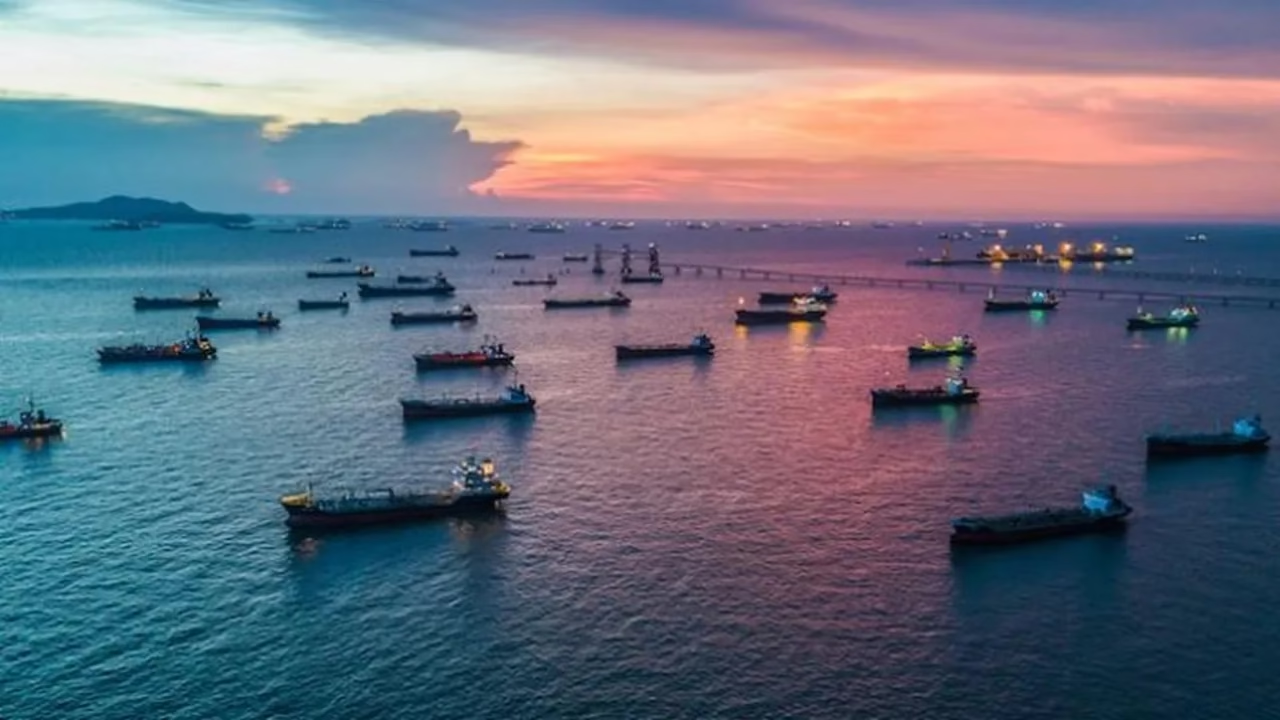
The DeepBridge Solution: Proactive Partnership & Expertise
Recognizing the gravity of the situation, the operator engaged DeepBridge Maritime Consulting to provide an immediate and effective intervention. DeepBridge’s response was to deploy a senior consultant—an experienced ex-Master with extensive command experience on tankers and deep expertise as an ISM/ISPS/MLC lead auditor—to board the vessel at its next port of call.
This approach is central to the DeepBridge philosophy of “authority + empathy.” The consultant’s seagoing background provided instant credibility with the Master and crew. This was not an external auditor imposing a checklist; it was a fellow mariner who understood the operational pressures of life at sea. This foundation of mutual respect fostered a collaborative environment, turning a high-stakes audit into a constructive partnership aimed at a shared goal: sustainable compliance.
DeepBridge implemented a two-pronged methodology designed to treat both the symptoms and the underlying cause of the compliance failures.
- Phase 1: Technical Rectification & PSC Preparedness: The first priority was a comprehensive, hands-on review of all hardware, documentation, and procedures directly related to the previous PSC deficiencies. This involved physically testing the emergency fire pump, operating remote quick-closing valves, verifying the functionality of all fire dampers, meticulously reviewing logbooks and certificates, and conducting a full review of the voyage plan. This phase addressed the immediate, observable symptoms to prepare the vessel for its next PSC inspection.
- Phase 2: SMS Root Cause Analysis: With the immediate risks contained, the consultant focused on the more critical question: why did these fundamental deficiencies occur on a vessel operated by an established company? The investigation revealed that while the company’s SMS was comprehensive on paper, it was not being effectively used as a living safety tool on board. The crew perceived the endless paperwork and procedures as a bureaucratic burden, leading to a phenomenon of “compliance fatigue.” The major ISM non-conformity was the ultimate evidence of this cultural disconnect.
The DeepBridge solution was not to add more procedures to an already cumbersome system. Instead, the focus shifted to re-engaging the crew and rebuilding their ownership of the SMS. The consultant conducted practical, on-board training sessions focused on high-risk areas. These sessions simplified complex procedures and directly linked them to the crew’s personal safety and the vessel’s operational security. By demonstrating the practical value of the SMS in preventing accidents, the intervention began to transform the safety culture from one of passive compliance to one of proactive risk management. All corrective actions were developed with the Master and Chief Engineer, ensuring the solutions were realistic, workable, and sustainable within the demanding environment of a modern tanker.
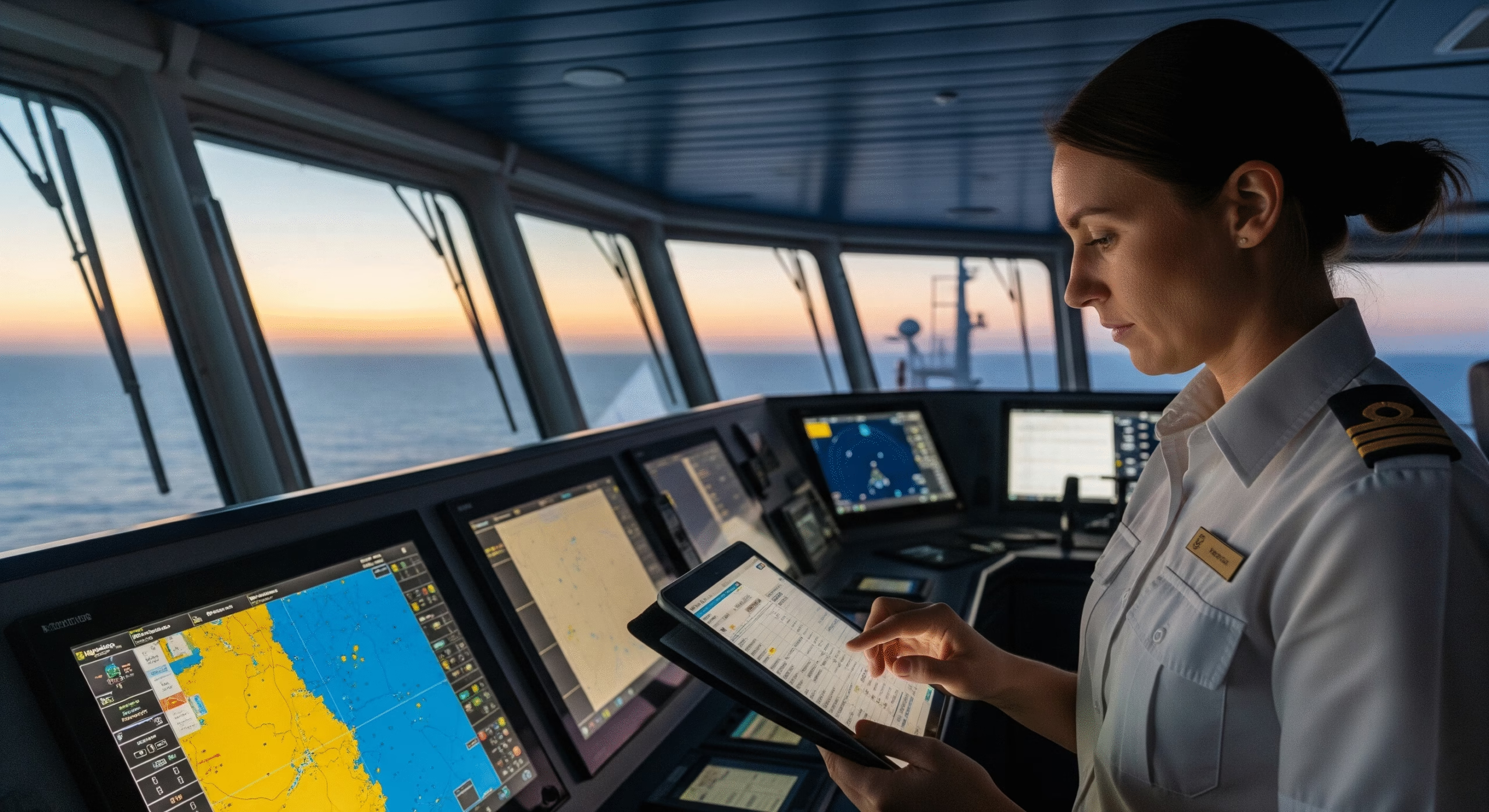
Measurable Improvements & Business Impact
The direct result of DeepBridge’s targeted intervention was a complete turnaround in the vessel’s compliance status and operational readiness. The outcomes were immediate, measurable, and commercially significant.
- Zero-Deficiency PSC Inspection: At its very next European port of call, the vessel was subjected to a rigorous and detailed PSC inspection. It was cleared with zero deficiencies, a powerful testament to the effectiveness of the corrective action plan.
- 100% Mitigation of Ban Risk: The successful inspection completely eliminated the threat of a third detention and the catastrophic commercial consequences of a regional ban.
- 12 Critical Deficiencies Rectified: All deficiencies from the previous detention were formally closed out, with documented evidence that the root causes had been addressed within a revised and revitalized SMS.
- 40% Improvement in Crew Drill Performance: The consultant conducted a series of unannounced emergency drills, measuring a 40% improvement in crew response times and procedural effectiveness compared to the initial assessment, demonstrating a tangible increase in on-board preparedness.
These technical metrics translated directly into crucial business outcomes. Operational continuity was preserved, protecting vital revenue streams and ensuring the vessel could continue to trade freely in its key market. The operator’s reputation was restored, with the zero-deficiency inspection sending a strong, positive signal to charterers, vetting bodies (SIRE), and insurers that decisive action had been taken to rectify management failings. Most importantly, the intervention fostered an enhanced safety culture on board, reducing the likelihood of future incidents and improving crew morale.

A Partnership for the Future
The successful PSC inspection was not the end of the engagement, but rather the beginning of a long-term cultural transformation for the client. The DeepBridge intervention was designed not merely to pass a single audit, but to embed a sustainable culture of continuous improvement and proactive compliance across the fleet.
This case demonstrates the core value of DeepBridge Maritime Consulting. We provide more than just audits; we deliver enduring partnerships. Our strength lies in our team of experienced ex-seafarers who understand the maritime world from the inside out. We provide practical, workable solutions that bridge the gap between ship and shore, transforming compliance from a burden into a competitive advantage. By empowering crews and strengthening management systems, we help our clients navigate the complexities of the modern maritime industry with resilience and confidence.
Discover how DeepBridge Maritime Consulting can help your fleet achieve compliance with confidence. Contact us today for a confidential assessment.

Navigate Compliance. Secure Performance.
At Deep Bridge Maritime Consulting, we help shipowners and operators stay ahead in today’s demanding maritime landscape.
Our services include:
- Pre-Inspection Audits (SIRE 2.0, CDI, PSC)
- Safety Management Systems (SMS) Development & Gap Analysis
- Crew Training & Competency Assessments
- Maritime Investigations & Root Cause Analysis
- Regulatory Compliance Advisory
📈 Gain confidence before inspections.
⚓ Ensure safer, smarter, and more efficient operations.
👉 Take the first step today – Contact Us
Ready to work with the best?
Contact us to discuss your needs and get a tailored offer.
