
How a MEG4 Audit Saved a Shipowner Hundreds of Thousands of Dollars and Prevented a Disaster.
Scene and Problem
Surprisingly often, when conducting mooring and anchoring audits on tankers, I encounter the same recurring story. The shipowner and crew are convinced that their vessel meets all OCIMF MEG4 requirements. After all, the vessel regularly calls at demanding terminals where difficult inspections are routine, and recent controls have not revealed any major objections.
This false sense of security—resulting from a series of successful, routine inspections—can lull decision-makers into complacency.
The thinking becomes: “If nothing bad has happened for years, everything must be fine.” Yet, experience teaches us that it’s precisely behind this façade of apparent order that the greatest risks are usually hiding.
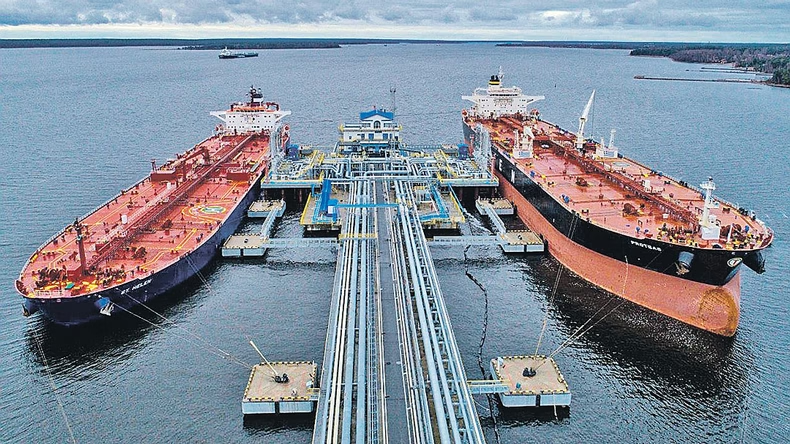
The case study revolves around an Aframax tanker of 115,000 DWT, regularly calling at ports in the ARA (Amsterdam-Rotterdam-Antwerp) region.
During one such audit—an entirely typical day, good weather, a businesslike atmosphere on board—I was asked to carry out a comprehensive assessment of MEG4 compliance. The owner wanted a “confirmation of compliance” before an upcoming inspection. Even before stepping on deck, I knew the real question was not “are the documents there?” but “do the documents and onboard practice truly match?” MEG4 is not just a set of rules—it’s a philosophy of proactive risk management, where real safety always outweighs bureaucracy.
Documentation Under the Microscope – “Paper Tigers”
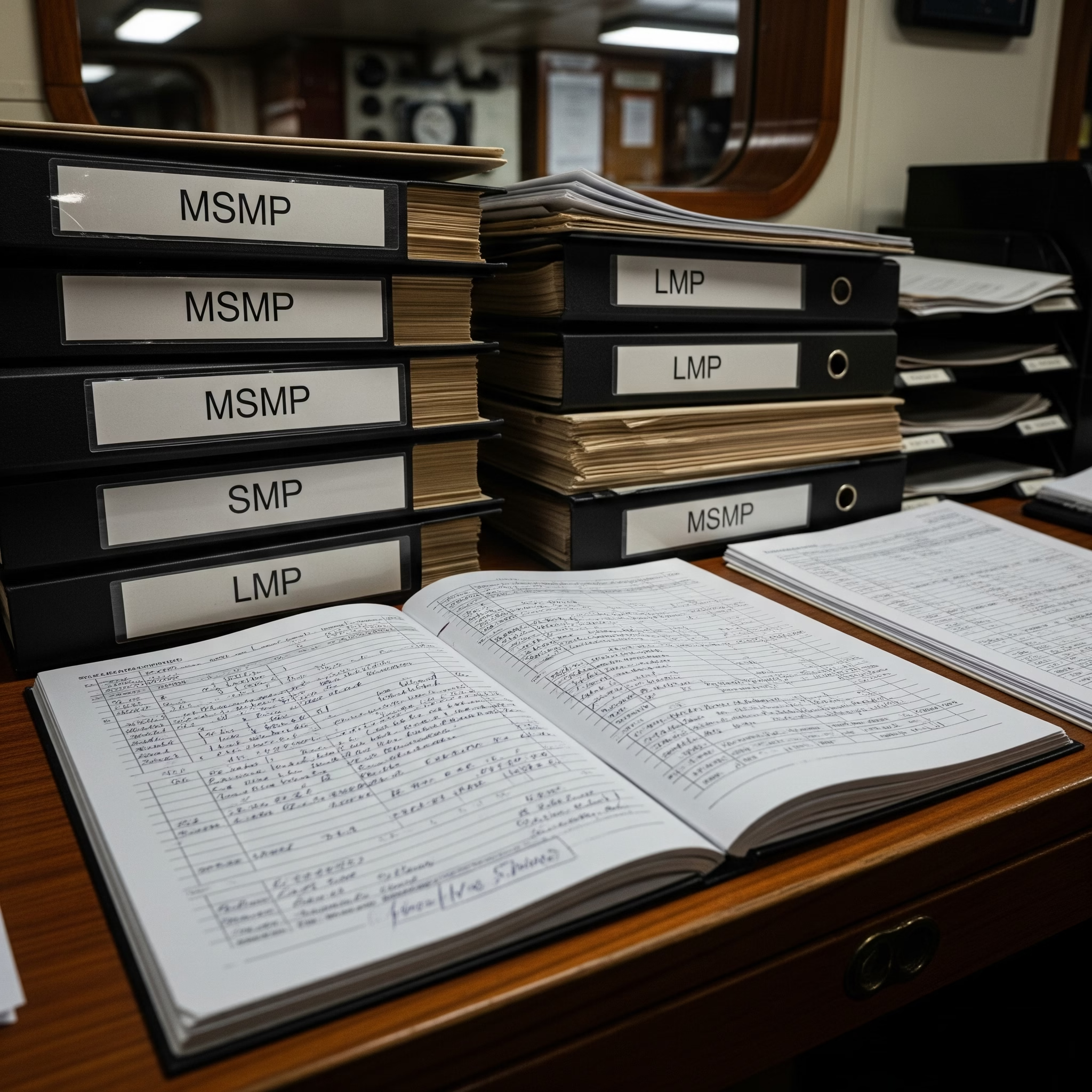
I start in the chief mate office. On the table: a stack of folders, the paper line register, the MSMP in various different folders, and a set of very old certificates. In theory, everything is there—procedures, tables, even neatly bound printouts. But the more I examine the details, the more uneasy I become.
Mooring System Management Plan (MSMP) – The mooring management plan exists, but it’s generic. It looks like a universal template—no analysis of mooring forces for the vessel’s actual trading routes, no specific alternative procedures for challenging ports, no history of mooring layout changes.
Even more worrying, the MSMP did not include two critical safety parameters: the actual Line Design Break Force (LDBF) values of the mooring lines, and the ship design Safe Working Load (sdSWL) for mooring equipment. Without these figures, the plan was missing the very numbers needed for any meaningful risk assessment or for setting winch brake capacities. This document was created “just to be there,” not as a tool for real safety management. MEG4 stresses that the MSMP should be a “living” document, tailored to the vessel’s specifics, not just a copy from the internet.
Line Management Plan (LMP) – Here, the situation is even more complicated. The line register exists, but it’s superficial: you’ll find installation dates and approximate diameters, but it lacks key information required by MEG4:
- No unique line identifiers—each mooring line should be tracked from purchase to retirement,
- No log of “hours under tension”, one of the main indicators of material fatigue,
- The history of inspections and line rotations (end-for-end)—if present at all—is irregular and incomplete.
- Crucially, the actual LDBF values in the register did not match the values on the line certificates or manufacturer’s specifications.
Such a register does not allow for informed, data-driven decisions about retiring a line from service, only guesswork or “because it’s been there a long time”.
Certificates and Traceability – The manufacturer’s certificates for the lines are available, but physically, it’s impossible to link them to specific lines currently in use. There are no durable markings on the lines, so it’s unclear which line matches which certificate. As a result, verifying key safety parameters—like the actual, current LDBF or checking against the equipment’s sdSWL—became little more than speculation.
All these shortcomings mean the line management system becomes a “paper tiger”—existing in theory, but not in practice. Documentation does not reflect reality, making it difficult to make proper decisions regarding maintenance, replacement, and safe equipment operation. In short: nobody could be sure of the true breaking strength of their own mooring lines, nor whether the system was operating safely within the designed load limits.
Technical and Operational Status – Behind the Scenes On Deck
The next stage is a deck inspection—where “theory meets practice”. What do we actually find?
Line Configuration
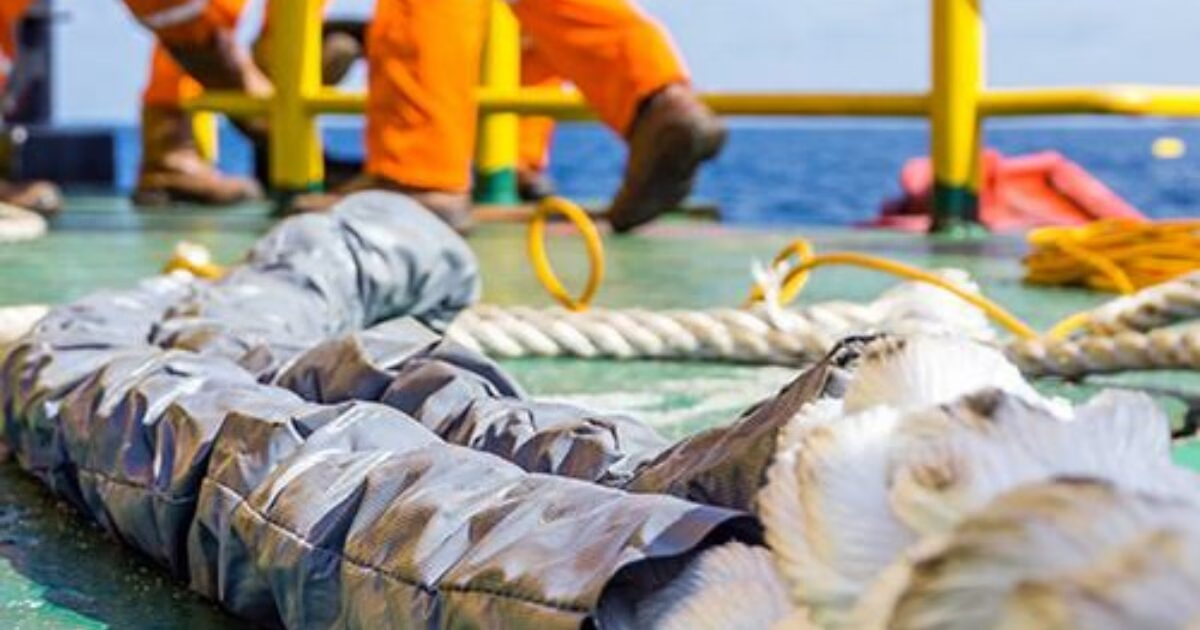
The most common issue: on one side of the vessel, for the same tasks (e.g. bow springs or stern lines), lines of completely different characteristics are used. They differ in age, material, wear level, and sometimes even length and manufacturer. The effect? It’s like trying to tow a load with a car and a bicycle at the same time. The stronger, stiffer line takes most of the force, while the weaker one does almost nothing. The result? One line may snap before the other even becomes taut—a straightforward path to failure, especially during sudden maneuvers or increased tension.
Wear and Damage
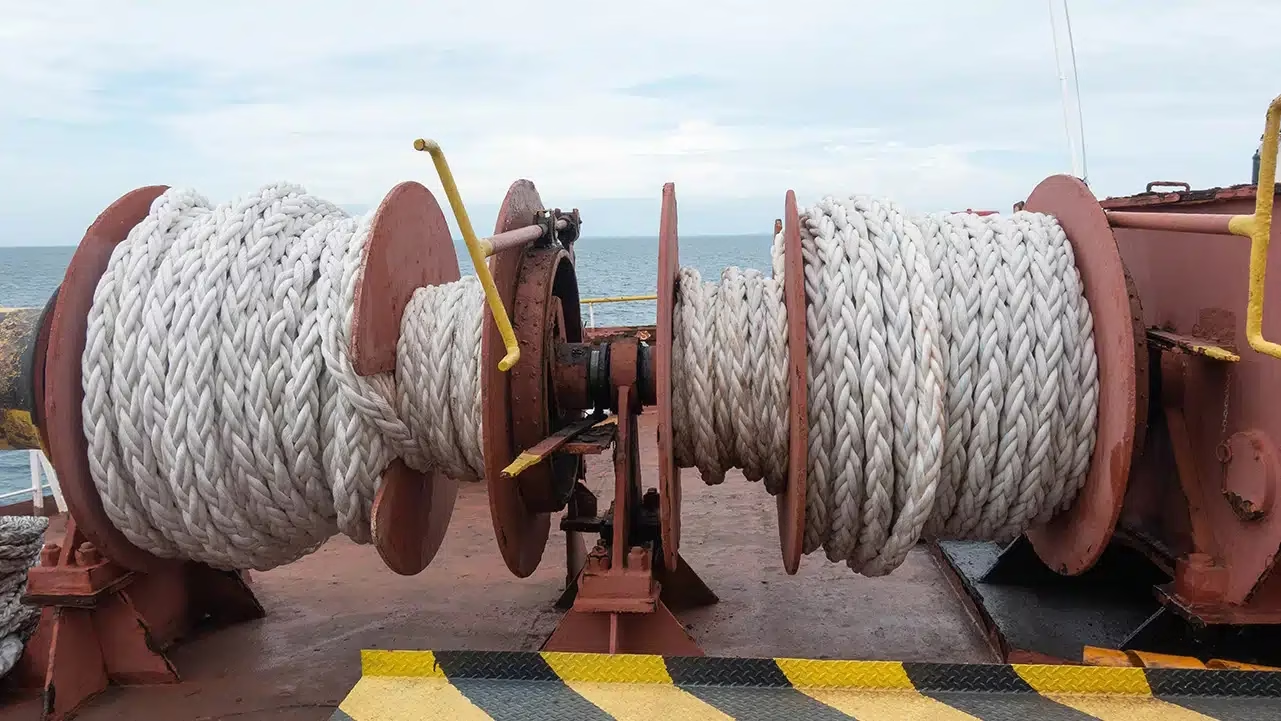
I take a closer look at the lines. There are deep abrasions and glazed areas where the lines pass through fairleads or rollers. Some lines have visible rust particles on their surface—a result of contact with uncleaned hardware. There are no signs of regular line rotation (end-for-end), so the same sections are always subjected to the greatest wear. Even if 95% of the line looks good, one damaged spot can make it fail at a critical moment.

Winch Brake Settings
One of the most dangerous findings was related to the winch brake settings. The crew was unsure about the correct sdSWL (ship design Safe Working Load) values, so they adopted the highest value found on the biggest fairlead onboard. This led to setting the brakes to incorrect limits—often much too high or not matched to the weakest point of the system. As a result, the winch brakes did not correspond to the actual safe working loads of the system, in clear conflict with MEG4 recommendations. According to OCIMF MEG4, winch brakes for synthetic ropes should be set to not more than 60% of the SDMBL (Ship Design Minimum Breaking Load).
Additionally, the last brake test had been performed a year earlier—even though the brake linings had been replaced only two months ago and no subsequent test was conducted. There was also a lack of clear information on the winches: no markings for direction of rotation, no updated capacity plates, and no visible identification. In practice, this made it almost impossible for the crew to verify or adjust the brakes correctly before a critical mooring operation.
If the brake only releases when the line is already breaking, the safety system is failing. The brake, which is supposed to be the controlled “weak link”, becomes an unpredictable time bomb.
Crew Awareness
Conversations with officers and crew reveal that their practical knowledge doesn’t always keep pace with changing regulations. Key MEG4 concepts—differences between MBL and LDBF, the new approach to brakes, criteria for inspecting and retiring lines—are often unknown or confused with old habits. The will is there, but actions don’t always follow best practice. The greatest risk is “technological debt”—modern equipment without updated documentation or proper crew training.
Remedial Plan and Actions Taken
After the audit, the key is not just pointing out errors, but providing a practical, actionable roadmap. Together with the shipowner, we developed a systemic approach covering four pillars: documentation, equipment, people, and procedures.
Documentation
A dedicated, regularly updated MSMP was created, tailored to the vessel’s specifics, trading routes, and real operational scenarios. Additionally, a simple digital LMP was implemented, enabling the tracking of each line’s full life cycle: recording hours under tension, inspection dates, line rotations, replacements, and unique identifiers. This brought full traceability and transparency to the mooring system management.
Crew Training
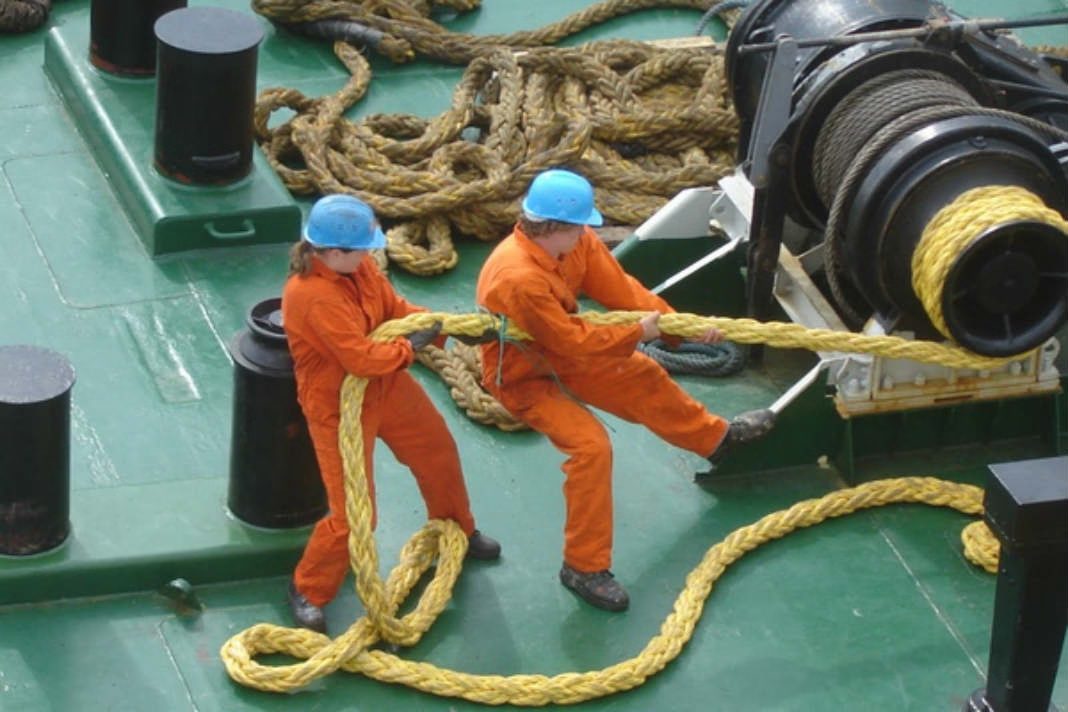
We organized hands-on workshops on deck—showing how to properly inspect a line, what signs of wear to look for, how to identify snap-back zones, and how to apply formal retirement criteria. This approach led to greater operational awareness and more confident, data-driven decision-making among all crew members.
Line Replacement and Rotation
A replacement schedule was established for the most worn or incompatible lines. A clear end-for-end rotation policy was implemented, ensuring every section of each line alternately works in different positions, thus preventing localized overuse. New lines are now immediately marked and registered in the digital log, guaranteeing up-to-date records.
Equipment Settings
All winch brakes were recalculated and set according to the actual characteristics of the lines in use, with brake values precisely adjusted to 60% SDMBL, in line with MEG4. Each winch was fitted with markings displaying the correct setting and clear directional markings, eliminating confusion and reducing operational risk.
| Area | Before Audit | After Recommendations |
|---|---|---|
| Documentation | Generic MSMP, incomplete LMP, no line identification | Dedicated MSMP, digital LMP, full traceability |
| Line configuration | Mixed lines of various types on the same side | Homogeneous lines for the same tasks |
| Equipment status | Damaged, unrotated lines, no inspection history | Replacement schedule, regular rotation, wear monitoring |
| Brake settings | Incorrect values, no plates | Set to 60% SDMBL, proper markings |
| Crew competence | No knowledge of MEG4 philosophy, | Practical training, adoption of new standards |
The Power of a Proactive Audit
The benefits of the changes were visible almost immediately. The vessel successfully passed a demanding inspection at a high-standard terminal—not only because the crew had mastered the documentation, but because they were able to clearly explain their safety procedures, demonstrate a real understanding of the risks, and respond confidently to the inspector’s questions. Most importantly, daily mooring operations became safer, more predictable, and free from the routine “grey areas” that so often cause problems during high-stress port calls.
This experience proves that OCIMF MEG4 compliance is not a one-off project but a continuous process. Systematic, professional audits and ongoing implementation of best practices are not just an operational cost—they are a true investment, leading to fewer incidents, less downtime, stronger vetting performance, and greater appeal for charterers. Building a culture of proactive safety doesn’t just help avoid accidents and delays; it strengthens your company’s reputation and supports long-term business growth.
Our Offer: Mooring System Audits and Beyond
If you want certainty that your mooring system operates safely—not just “on paper” but in real life—consider a dedicated audit tailored to your vessel or fleet.
We can support you with:
- Mooring system audits in line with OCIMF MEG4 and SIRE 2.0 requirements,
- Pre-vetting inspections to prepare for terminal and oil major reviews,
- Technical documentation reviews (MSMP, LMP, brake settings, line certification, sdSWL compliance, and more),
- Onboard crew training and practical workshops,
- Support in developing digital tools and documentation for continuous compliance,
- Customized risk assessments for mooring and deck operations,
- Follow-up advisory and implementation support.
Are you sure your mooring arrangements meet the latest standards—and that your crew is ready for the next inspection?
If you have any doubts, it’s worth investing in an audit that will let you address potential issues before they become a problem at the terminal.
Contact us to discuss a tailored mooring or safety audit for your vessel or your whole fleet. Let’s work together to raise the bar for operational safety and compliance—so your ships stay ready for any challenge, anywhere in the world.
Mooring & Anchoring Audits and Beyond
If you want certainty that your mooring system operates safely—not just “on paper” but in real life—consider a dedicated audit tailored to your vessel or fleet.
We can support you with:
- Mooring system audits in line with OCIMF MEG4 and SIRE 2.0 requirements,
- Pre-vetting inspections to prepare for terminal and oil major reviews,
- Technical documentation reviews (MSMP, LMP, brake settings, line certification, sdSWL compliance, and more),
- Onboard crew training and practical workshops,
- Support in developing digital tools and documentation for continuous compliance,
- Customized risk assessments for mooring and deck operations,
- Follow-up advisory and implementation support.
Are you sure your mooring arrangements meet the latest standards—and that your crew is ready for the next inspection?
If you have any doubts, it’s worth investing in an audit that will let you address potential issues before they become a problem at the terminal.
Contact us to discuss a tailored mooring or safety audit for your vessel or your whole fleet. Let’s work together to raise the bar for operational safety and compliance—so your ships stay ready for any challenge, anywhere in the world.
Ready to work with the best?
Contact us to discuss your needs and get a tailored offer.
